
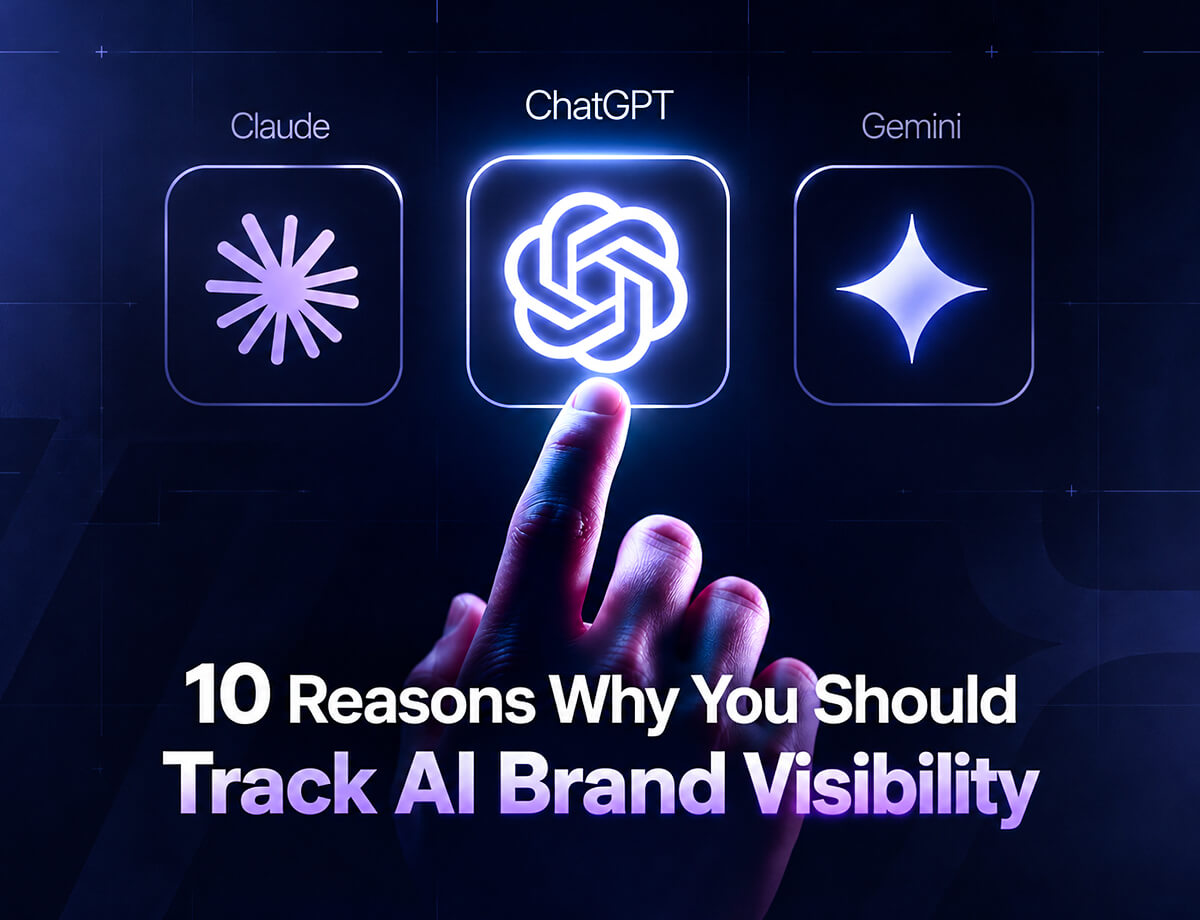
Why Should I Track AI Brand Visibility?
Tracking AI brand visibility helps you understand how often your brand appears in AI-generated answers and how it is represented. AI brand monitoring reveals which topics, products, and competitors influence these results, helping you identify visibility gaps, improve your content strategy, protect your brand reputation, and increase your chances of being mentioned across AI-powered search experiences.
1. AI Is Becoming Part of the Customer Discovery Journey
AI is quickly becoming another way people discover products, services, and businesses. According to Lab42, 54% of surveyed U.S. consumers had used AI while shopping, and 42% of those AI users had purchased a product recommended by AI. This shows that AI recommendations can influence customers before they ever visit a company’s website.
That’s where AI brand monitoring becomes valuable. It helps you see whether your brand appears when potential customers ask AI tools questions related to your industry. Rather than only measuring website traffic after someone finds you, you can understand whether your brand is already part of the conversation during the research stage.
2. AI May Present an Incomplete or Outdated View of Your Brand
AI-generated responses are shaped by the information available to the systems generating them. Because these responses can draw from several different sources, the way your business is presented may sometimes be incomplete, outdated, or different from how you currently position your brand.
OpenAI explains that websites can appear and be cited in ChatGPT Search when their content is relevant and discoverable. Perplexity similarly describes its search experience as combining information from multiple web sources and providing citations to those sources.
Regular AI brand monitoring can help you spot inaccurate descriptions, missing details, outdated information, or weak brand representation. Identifying these issues early gives you an opportunity to investigate and address them instead of discovering them unexpectedly through a customer or prospect.
3. Competitors Can Gain AI Visibility Without Outranking You
Traditional SEO mainly looks at where a website ranks for a particular search query. AI search works differently because it can pull information from several sources and combine it into a single response. As a result, a competitor can be mentioned by AI even when your website ranks higher in traditional search results.
This means AI brand visibility does not always follow the same pattern as your standard search performance. A competitor may have broader content coverage, more frequently cited sources, or a stronger overall presence across relevant websites, which can increase the chances of being included in AI-generated answers.
This is where AI brand monitoring can provide useful insight. Comparing your brand with competitors can show where they are being recommended, which topics they appear strongly for, and where content or authority gaps may be limiting your own visibility.
4. AI Recommendations Can Influence Purchase Decisions
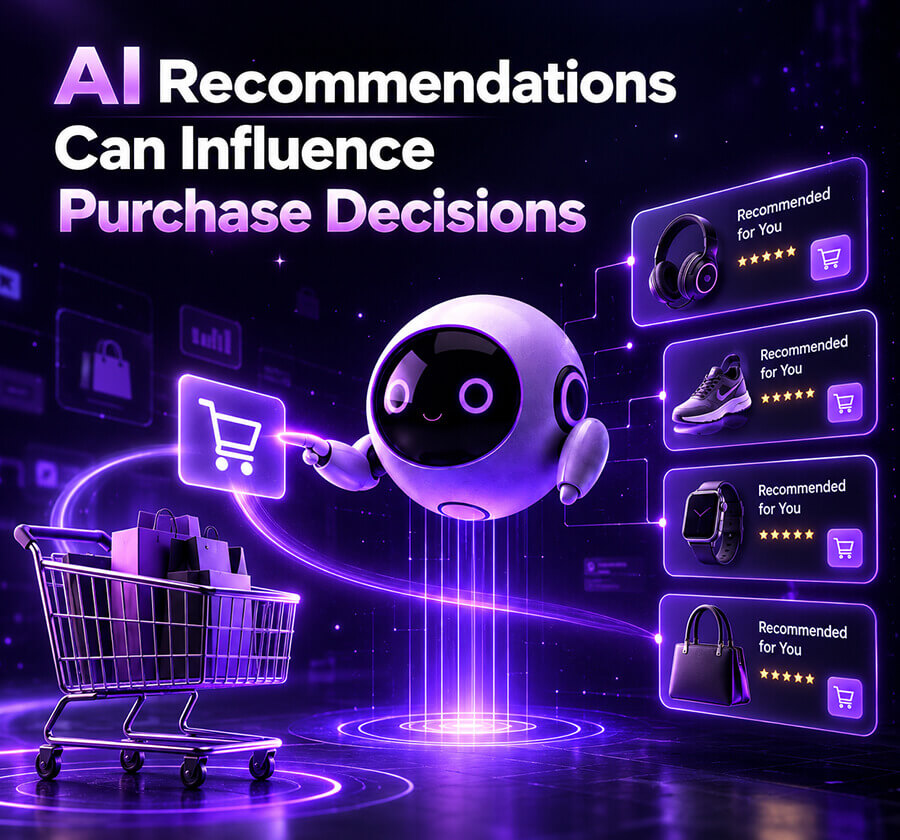
AI is increasingly being used for more than basic information searches. People can now ask AI tools to recommend products, compare brands, find alternatives, evaluate features, consider prices, or suggest options for a specific need.
A 2026 consumer study found that 52% of surveyed AI shoppers said AI had influenced at least one purchase decision. Another 2026 observational study reported increases in brand-specific searches and website visits after users followed AI recommendations.
This does not mean that every AI mention will directly result in a sale. However, it does show why businesses have a reason to pay attention to how their brands appear in AI recommendation and comparison experiences.
5. Traditional SEO Reports Do Not Show the Full Picture
AI visibility tools can provide additional data, including mentions, citations, cited pages, and share of voice across AI responses. Ahrefs, for instance, measures AI visibility using mentions, citations, impressions, and AI Share of Voice, while Semrush tracks mentions, competitors, prompts, and changes in AI visibility over time.
For this reason, AI brand visibility works best as a complementary measurement alongside traditional SEO rather than as a replacement for it.
6. Brand Perception in AI Answers Can Affect Trust
Simply knowing that your brand has been mentioned is not enough. The context surrounding the mention matters just as much.
An AI system might describe a company as affordable, premium, specialist, beginner-friendly, enterprise-focused, or suitable for a particular type of customer. These descriptions can influence how someone views the business before they even visit its website.
Effective AI brand monitoring should therefore look beyond the number of mentions. It should also examine the language, recurring themes, sentiment, product associations, and competitor comparisons connected to the brand.
Semrush currently includes brand sentiment and narrative analysis alongside AI visibility and competitor information, reflecting the broader need to understand how brands are represented in AI-generated responses.
7. AI Visibility Changes Across Platforms
AI search is not one single environment. Platforms such as ChatGPT, Google AI Overviews, Google AI Mode, Perplexity, Gemini, and Copilot use different systems, interfaces, sources, and retrieval methods.
For example, ChatGPT Search provides links to web sources, while Perplexity states that its answers include direct citations. Google has expanded AI Overviews and AI Mode with links to relevant websites, and Microsoft Copilot provides citations for web-search queries used in its responses.
Because these platforms work differently, AI brand visibility can also vary between them. A brand may appear regularly in one AI environment while receiving much less visibility on another.
8. Proactive Monitoring Helps Protect Brand Reputation
Businesses already monitor reviews, search results, social conversations, and media coverage to understand how their brand is being represented. AI adds another important channel where information about a company can reach potential customers.
Regular AI brand monitoring makes it easier to spot changes before they become bigger concerns. For example, you may discover that a product is being described incorrectly, outdated business information is still appearing, or a competitor is increasingly being recommended for an important query.
By identifying these changes early, businesses can investigate them and respond proactively rather than waiting for customers to bring the issue to their attention.
9. AI Visibility Reveals Content and Authority Gaps
AI-generated answers can provide clues about which information and sources are influencing recommendations within your industry. Monitoring tools can show which pages and external websites are repeatedly cited when AI responds to topics related to your market.
For example, Ahrefs Brand Radar identifies cited pages and domains and can compare AI visibility across channels such as SEO, YouTube, Reddit, and TikTok.
These insights can highlight areas where your own content may be falling behind. Competitors might have more detailed comparison pages, stronger category content, useful resources, or greater third-party coverage.
Those findings can then be used to improve content planning and broader digital marketing strategies.
10. It Creates a New Performance Benchmark
Marketing teams already track organic rankings, traffic, backlinks, engagement, and paid performance. AI visibility adds another layer that can be measured and monitored over time.
Creating a baseline makes it easier to understand whether your AI presence is improving instead of relying on occasional manual searches. Useful metrics can include mention frequency, citation rate, competitor share of voice, sentiment, prompt coverage, and the pages or domains influencing AI responses.
Why Should I Track AI Brand Visibility - Platform by Platform Breakdown
ChatGPT and OpenAI
ChatGPT Search can access information from the web and include links to relevant sources within its responses. OpenAI also explains that public websites can be surfaced in ChatGPT Search and recommends allowing OAI-SearchBot to crawl content that publishers want ChatGPT to discover, surface, and cite clearly.
For marketers, this makes it useful to monitor relevant buyer prompts and see whether the brand appears in responses, which sources are being cited, how the business is described, and which competitors are mentioned alongside it.
Google AI Overviews
Google AI Overviews and AI Mode are becoming a larger part of the Google Search experience. Google has also continued developing these experiences to include direct links and help users discover relevant websites.
Because of this, monitoring Google can add useful context to standard ranking reports. Businesses can look beyond traditional search positions and understand how their brand is represented within AI-generated answers.
Perplexity AI
Perplexity is built around combining information from multiple sources and presenting direct citations that point users back to those sources.
For brands, this makes citation tracking especially valuable. It allows marketers to identify which pages and third-party websites are influencing AI answers and determine whether their business appears for relevant research, comparison, and recommendation queries.
Microsoft Copilot and Bing
Microsoft Copilot can use Bing search to bring additional web information into its responses. Microsoft also provides citations that show the web-search queries generated from prompts and the websites used to support the resulting answers.
Monitoring this platform can therefore help businesses understand which sources are contributing to important category conversations and identify situations where their brand is either being surfaced or missing from relevant AI responses.
What Are the Best AI Brand Monitoring Tools Available?
There is no single solution that will suit every business. The best ai brand monitoring tools depend on what you actually need to track, including the AI platforms you want to monitor, prompt volume, regional coverage, competitor analysis, citation depth, reporting requirements, and whether your business already relies on an SEO platform.
Some of the current options include Ahrefs Brand Radar, Semrush AI Visibility Toolkit, OtterlyAI, and Profound, while several other platforms provide similar AI-search monitoring features. Market comparisons also include tools such as SE Ranking, Scrunch, and Conductor.
What to Look for in the Best AI Brand Monitoring Tools
The best ai brand monitoring tools should do more than collect data and display it in another dashboard. The important question is whether the information helps your team understand what is happening and decide what to do next.
Look for features such as:
- Platform coverage: Does the tool monitor the AI platforms your audience actually uses?
- Prompt tracking: Can you monitor the questions, searches, and topics that are relevant to your business?
- Competitive analysis: Can you identify competitors that are appearing where your brand is missing?
- Citation analysis: Can you see which pages and domains are influencing AI-generated responses?
- Perception analysis: Can you understand how AI systems describe and position your brand?
- Historical tracking: Can you compare your AI visibility and performance over time?
- Reporting: Can the data be turned into practical insights for marketing teams and clients?
Ahrefs currently reports AI visibility across multiple AI indexes and provides information on mentions, citations, and cited pages. Semrush, meanwhile, offers reporting around visibility, competitors, prompts, sentiment, and technical AI-readiness.
Choosing the Best AI Brand Monitoring Tools for Different Needs
If your business already uses an SEO platform, adding AI visibility monitoring to the same ecosystem can make reporting and analysis more straightforward. For example, Semrush combines AI visibility with other marketing data, while Ahrefs connects Brand Radar reporting with broader visibility signals.
For agencies, factors such as white-label reporting, competitor benchmarking, prompt management, multiple domains, regional coverage, and export options may be more useful than simply having the largest number of features.
Frequently Asked & Questions
1. Why should I track AI brand visibility if I already monitor traditional search rankings?
Traditional rankings show search positions, while AI brand visibility shows how your brand is mentioned, recommended, or cited in AI-generated answers.
2. What are the best AI brand monitoring tools available right now?
The best ai brand monitoring tools include Ahrefs Brand Radar, Semrush AI Visibility Toolkit, OtterlyAI, and Profound.
3. How often should I monitor my AI brand visibility?
Monitor AI brand visibility weekly or daily depending on your market and how frequently your strategy changes.
4. Can AI brand monitoring improve my SEO performance?
Yes, AI brand monitoring can reveal content gaps, competitor strengths, cited sources, and topics that need stronger coverage.
5. What should I do if AI is saying something inaccurate about my brand?
Use AI brand monitoring to identify the inaccurate claim and review the sources behind it before addressing the inconsistency.
6. How is AI brand monitoring different from social listening?
AI brand monitoring tracks how AI systems mention, describe, recommend, and cite your brand, while social listening monitors social conversations and sentiment.