
1. Executive Summary
The CBD industry has become highly competitive, making it increasingly difficult to rank on the first page for high-commercial-intent keywords. Today, strong rankings rely on more than quality content; they also depend on domain authority, topical relevance, and high-quality backlinks pointing to key commercial pages.
This case study highlights how a UK-based CBD retailer improved their search visibility using a strategic Low-OBL Homepage Aged Backlinks campaign. Rather than focusing on acquiring a large number of backlinks, the strategy prioritised carefully selected Aged PBN Domains with Low OBL (Max 20). Keeping each homepage link live throughout the campaign allowed authority to build steadily instead of relying on short-term gains.
The campaign was designed to improve Commercial Keyword Rankings, strengthen Homepage Authority, increase Link Equity, and boost overall Organic Visibility through a gradual and natural backlink approach. Every placement was supported by detailed research into competitor backlink profiles, existing authority, and commercially important landing pages to ensure each link contributed genuine SEO value.
By focusing on relevance, quality, and long-term homepage placements instead of link volume, the campaign delivered stronger keyword visibility, improved homepage authority, and consistent SERP Growth over the course of the campaign.
CAMPAIGN DETAILS
Campaign Overview
Max 20
Organic Visibility &
Link Equity
1.1 Initial Website Performance
Before the campaign, the website showed a clear need for stronger authority signals across the homepage and key commercial pages.
1.2 Website Performance After 8 Months
After implementing Low-OBL Homepage Aged Backlinks, the website showed consistent improvement across key performance metrics, with gains extending beyond individual keyword rankings.
PERFORMANCE OVERVIEW
Campaign Performance
| KPI | Before | After | Improvement |
|---|---|---|---|
| Monthly Organic Sessions | 18,200 | 30,240 | 1.17 |
| Ranking Keywords | 214 | 468 | 1.19 |
| Top 20 Keywords | 29 | 91 | 2.14 |
| Top 10 Keywords | 11 | 47 | 3.27 |
| Commercial Keywords on Page One | 3 | 22 | 6.33 |
| Homepage Authority Score | 34 | 49 | 0.44 |
| Homepage Referring Domains | 48 | 93 | 0.53 |
| Average Organic CTR | 2.80% | 4.90% | 0.75 |
2. Client Overview
The client operates in the UK CBD market, offering oils, capsules, gummies, topical creams, and wellness supplements. Despite ongoing investment in SEO and content, key commercial pages struggled to compete for high-value keywords.
The existing backlink profile was largely built from directories, guest posts, and general niche sites, providing limited authority for competitive terms. Several important pages therefore remained on Google’s second and third pages.
Competitor analysis showed stronger CBD brands benefiting from authoritative homepage links from aged domains with low outbound links. This created an opportunity to strengthen the site’s authority through targeted Homepage PBN Links.
Existing authority was also concentrated around informational content rather than the homepage, limiting Link Equity across commercial pages. The strategy therefore focused on strengthening homepage authority with Maximum 20 PBN Posts while building on the client’s existing SEO foundation.
WEBSITE OVERVIEW
Website Overview Before Campaign
3. Campaign Objectives
Clear campaign goals were defined before selecting any backlink opportunities, with the focus placed on quality, authority, and commercial relevance rather than backlink volume.
The main objective was to improve Commercial Keyword Rankings for high-intent CBD terms by strengthening homepage authority through carefully selected Maximum 20 PBN Posts. Additional goals included increasing Organic Visibility, supporting SERP Growth, and improving Link Equity across key commercial pages.
Success was measured through ranking movement, homepage authority, keyword performance, and organic traffic rather than the number of links acquired. This ensured each backlink supported measurable SEO growth.
CAMPAIGN OBJECTIVES
Campaign Objectives Summary
4. Initial SEO Challenges
The website had a solid SEO foundation, but ranking growth had plateaued. Key commercial pages were often stuck around positions 15-40, limiting high-intent traffic.
Competitor analysis showed stronger homepage authority and backlink profiles. The client’s links were mainly from directories, blog mentions, and lower-authority sites.
The focus therefore shifted from link volume to strengthening homepage authority and improving Link Equity across key commercial pages.
4.1 Highly Competitive CBD SEO Market
CBD is a highly competitive SEO sector, with established brands investing heavily in content, technical SEO, and authoritative backlinks. This makes it difficult for moderately authoritative websites to rank for valuable commercial terms.
Keyword research identified high-demand terms where the client’s pages were well optimised but lacked the authority needed to compete with established first-page competitors. The focus therefore shifted from producing more content to strengthening the site’s authority profile.
KEYWORD ANALYSIS
Competitive Keyword Analysis
| Commercial Keyword | Search Volume | Initial Position | Competition |
|---|---|---|---|
| Buy CBD Oil UK | 6,900 | 31 | Very High |
| CBD Gummies UK | 5,800 | 27 | Very High |
| CBD Capsules | 3,700 | 24 | High |
| CBD Cream | 2,900 | 19 | High |
| Broad Spectrum CBD | 1,600 | 22 | High |
| CBD Balm | 1,300 | 18 | Medium-High |
4.2 Weak Homepage Authority
The audit found a clear gap between the site’s overall backlink growth and its homepage authority. While the website had gained referring domains over time, few strong backlinks pointed directly to the homepage.
This limited the homepage’s ability to pass authority to key commercial pages through internal links. Instead of building links to individual pages, the campaign prioritised strengthening homepage authority so Link Equity could flow naturally across multiple product and category pages.
4.3 Limited Link Equity Distribution
The audit found that most backlinks pointed to informational blog content rather than the homepage or commercial pages. While these links supported overall authority, their value was not reaching the pages driving revenue.
Strengthening homepage authority offered a more scalable solution, allowing Link Equity to flow through existing internal links to categories and product pages without requiring separate campaigns for each page.
BACKLINK DISTRIBUTION
Existing Backlink Distribution
5. Link Building Strategy
After the audit, different link-building options were reviewed, including guest posts, niche edits, editorial outreach, and digital PR. However, the main gap remained strong, consistent authority at the homepage level.
The campaign therefore focused on Low-OBL Homepage Aged Backlinks from carefully vetted Aged PBN Domains. Instead of chasing link volume, we prioritised fewer, long-term placements that could build authority steadily.
Each domain was assessed for topical relevance, domain history, backlink quality, and outbound links. Only sites meeting the Low OBL (Max 20) requirement were selected to minimise authority dilution.
The homepage links remained active throughout the campaign, creating a consistent authority signal while supporting stronger Link Equity distribution across key commercial pages.
LINK SELECTION
Link Selection Criteria
6. Campaign Implementation
Once the audit identified weak homepage authority as the main limitation, the campaign moved into a controlled, phased rollout rather than immediate high-volume link building.
The focus was on carefully selected Maximum 20 PBN Posts from Aged PBN Domains, with every placement reviewed against the campaign’s quality standards.
Strengthening the homepage was intended to improve Link Equity flow through existing internal links, supporting category, product, and commercial pages. The campaign was gradually deployed over several months, allowing search engines time to crawl and assess each new authority signal while avoiding sudden backlink spikes.
6.1 Selecting High-Quality Aged PBN Domains
The quality of the linking domain was treated as a key factor in the campaign. Each Aged PBN Domain was manually reviewed for its history, backlink profile, indexing stability, outbound links, and topical relevance.
Domains with spam signals, excessive outbound links, irrelevant content, or unstable indexing were rejected. Priority was given to established domains with clean histories and relevance to health, wellness, lifestyle, or CBD topics.
DOMAIN SELECTION
Domain Selection Standards
6.2 Homepage Sticky Link Placement
Unlike contextual links that can become buried in older content, Low-OBL Homepage Aged Backlinks remain on the homepage throughout the period. This provides a consistent authority signal while allowing link equity to flow through existing navigation and internal links to categories and product pages.
Keeping each placement fixed also avoids the instability associated with frequently changing or rotating links. Each homepage link remained in place for the full campaign period.
6.3 Anchor Text Diversification
Anchor text was deliberately varied to keep the backlink profile natural. Rather than overusing exact-match commercial keywords, the campaign followed a balanced mix of brand mentions, naked URLs, generic anchors, partial-match phrases, and a limited number of exact-match terms.
This helped maintain natural-looking link patterns while still supporting topical relevance and commercial keyword growth.
6.4 Gradual Link Deployment
Homepage links were introduced gradually over several months rather than all at once. This created a more natural backlink growth pattern and gave search engines time to crawl, index, and assess each placement.
The rollout was adjusted based on ranking movement and campaign performance instead of following a fixed monthly link quota.
7. Campaign Performance
As homepage authority strengthened over 8 months, the website recorded steady improvements across key SEO metrics. Rather than sudden ranking spikes, the campaign delivered gradual growth in Commercial Keyword Rankings, Organic Visibility, and overall authority distribution.
The impact extended beyond the homepage, with stronger performance across product categories, informational pages, and other high-value commercial pages.
7.1 Commercial Keyword Improvements
Several priority commercial keywords moved from Google’s second and third pages onto Page 1 after the homepage authority improvements.
While results varied by keyword competition, the overall movement showed steady, sustained growth rather than short-term ranking changes.
7.2 Organic Traffic Growth
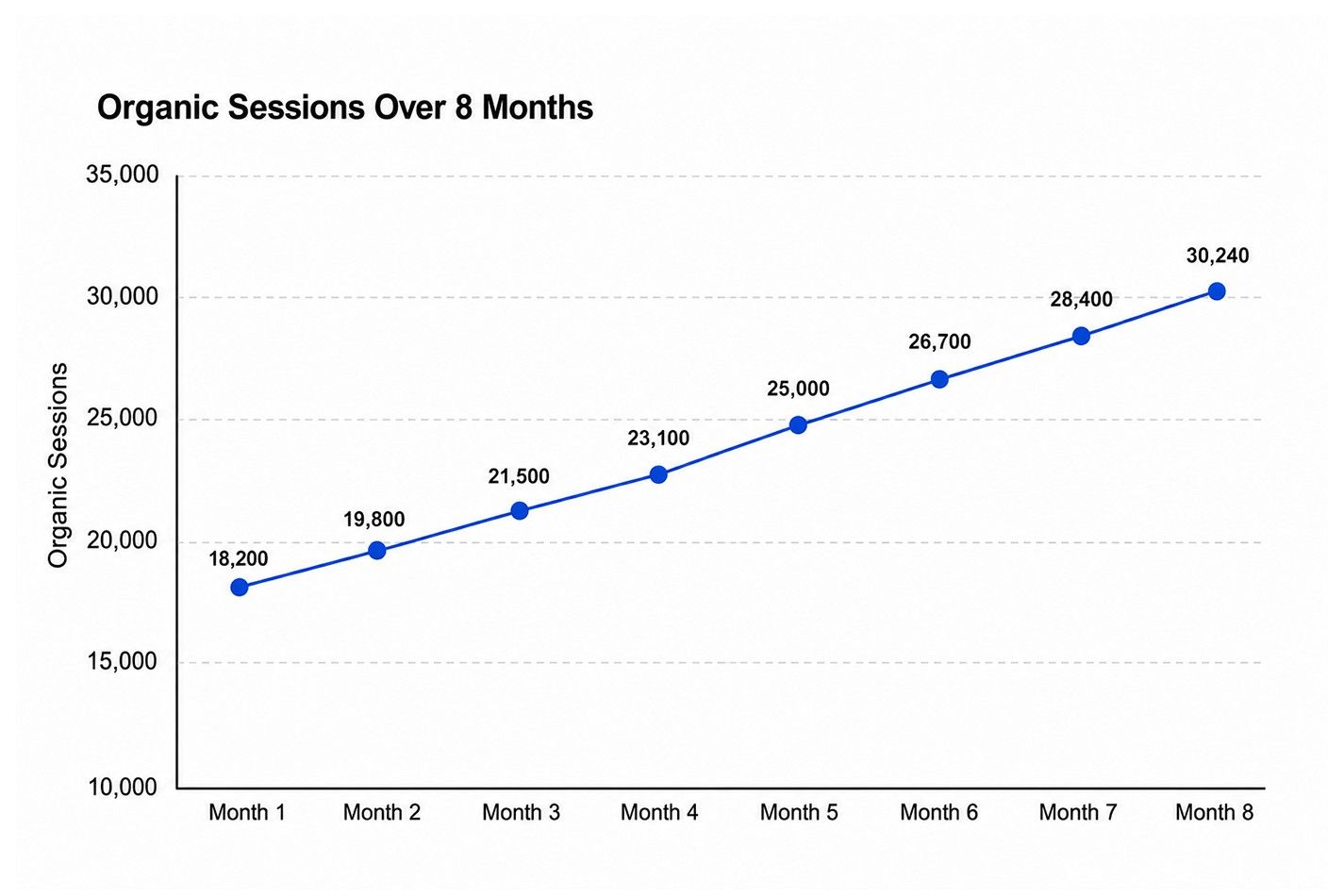
Higher rankings translated into increased organic traffic across both commercial and informational pages. Traffic grew steadily month over month as stronger homepage authority supported the wider site, rather than relying on short-term seasonal spikes.
TRAFFIC GROWTH
Organic Sessions
Overall organic traffic increased by approximately 89% during the campaign period.
7.3 Authority Improvements
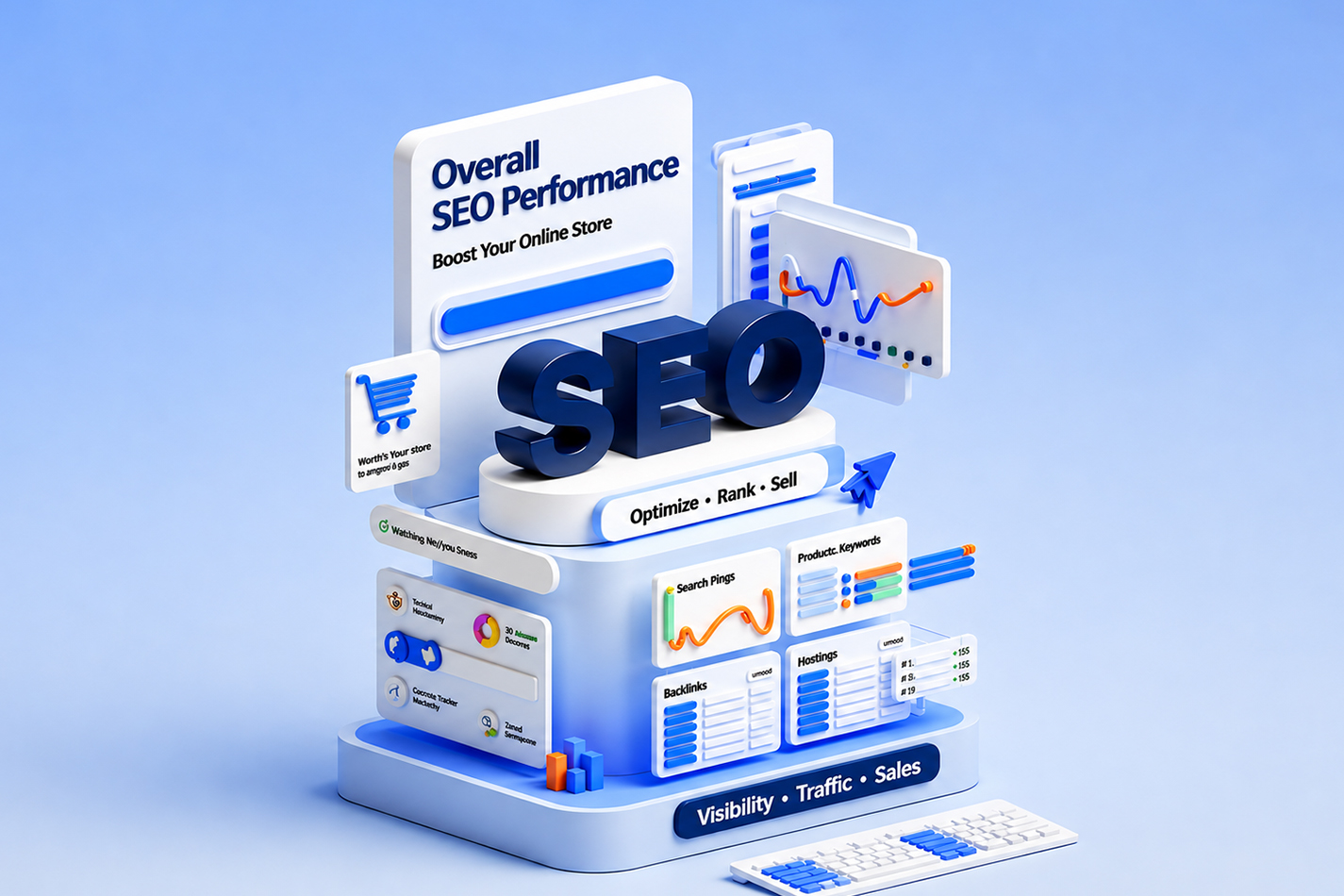
While authority metrics were not treated as the only measure of SEO success,the campaign showed clear improvement across several domain-level indicators. As homepage authority increased, the website also developed stronger authority signals across its wider structure, supporting commercial and category pages through existing internal links.
The website also showed better crawl efficiency and more consistent indexing of newly published commercial content. This indicated that the improvements were not limited to backlink numbers but were contributing to broader organic performance.
8. Business Impact
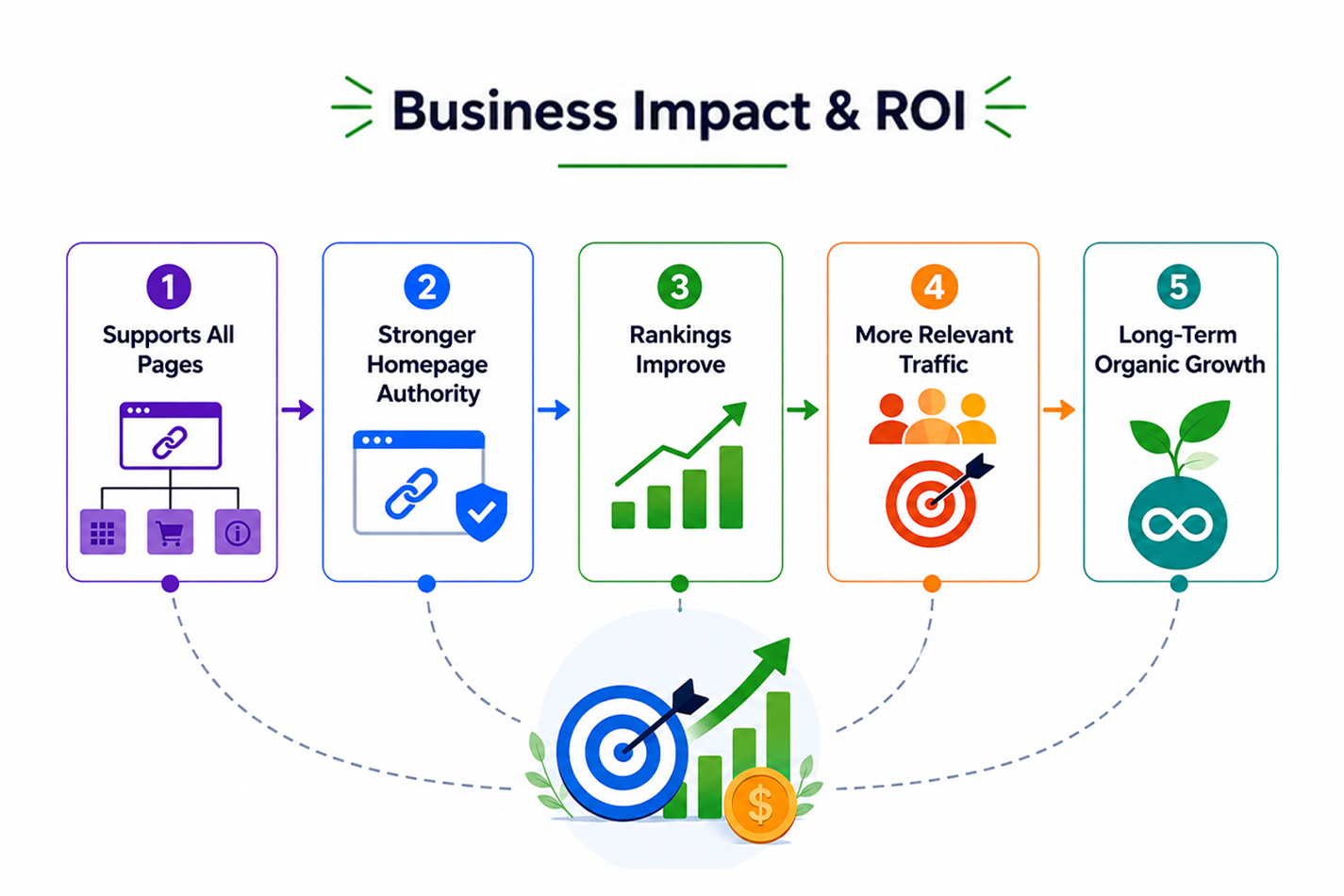
The campaign was designed to strengthen homepage authority, but its wider impact was seen in business performance. As commercial keywords reached Page 1, the website attracted more relevant visitors with stronger purchase intent.
Unlike paid campaigns, where traffic depends on ongoing spend, the authority built through homepage backlinks continued supporting organic visibility across product, category, and informational pages.Higher rankings also improved exposure for core commercial searches, helping the website capture a larger share of valuable organic traffic in the competitive CBD market.
Business Growth Overview:
- Monthly Organic Sessions: Increased from 18,200 to 30,240, bringing more users through search.
- Top-10 Commercial Keywords: Grew from 11 to 47, improving visibility for high-intent searches.
- Homepage Authority: Strengthened from Moderate to Strong, supporting wider site performance.
- Total Referring Domains: Increased from 318 to 421, expanding the site’s overall authority profile.
- Homepage Referring Domains: Increased from 48 to 93, strengthening the primary authority source.
- Estimated Organic Leads: Increased by approximately 92%, indicating stronger traffic quality and search visibility.
- Revenue: Increased as more commercially relevant organic traffic reached the website.
CAMPAIGN RESULTS
Consolidated Outcomes
| Business Metrics | Before Campaign | After Campaign | Growth |
|---|---|---|---|
| Monthly Organic Sessions | 18,200 | 30,240 | 66.15% |
| Commercial Keywords in Top 10 | 11 | 47 | 245.45% |
| Homepage Authority | Moderate | Strong | Significant Improvement |
| Total Referring Domains | 318 | 421 | 32.39% |
| Homepage Referring Domains | 48 | 93 | 93.75% |
| Monthly Organic Leads | 125 | 240 | 92% |
| Monthly Organic Revenue | Confidential | Confidential | Confidential |
9. Why Low-OBL Homepage Aged Backlinks Worked
The campaign worked by strengthening the homepage as an authority hub rather than building links to individual pages. As homepage authority improved, existing internal links helped distribute that value across product, category, and commercial pages.
Several elements contributed to the results:
Consistent Homepage Visibility
Low-OBL Homepage Aged Backlinks stayed in place throughout the rental period, providing a stable backlink signal instead of disappearing into older content.
High-Quality Aged Domains
The campaign used carefully reviewed Aged PBN Domains with clean histories, relevant topics, and controlled outbound links. This helped maintain the quality of the backlink profile.
Natural Link Velocity
Links were introduced gradually over 8 months rather than all at once. This created a steady growth pattern and gave each placement time to be crawled and evaluated.
Diversified Anchor Profile
Branded terms, generic anchors, naked URLs, partial matches, and limited exact-match keywords were used to maintain a balanced and natural-looking anchor profile.
Internal Authority Distribution
Because the homepage connects to major sections of the website, stronger homepage authority supported category pages, product pages, and other commercially important content through existing internal links.
Ongoing Monitoring
Rankings, traffic, indexing, referring domains, and commercial keyword movement were monitored throughout the campaign. This allowed the strategy to be adjusted based on actual performance rather than assumptions.